
Bridge Over Boredom: 'Bridge to Nowhere' Framed Wall Art Landscape Magic (85x40.5cm)
You may also like

Moolwan Mountain Road Bridge Canvas Wall Art Painting (85x40.5cm) – Diagonal Depth That Pulls the Eye Without Demanding It
When You Can't Picture How Art Will Actually Sit on Your Wall
You've looked at this canvas three times already. You can see it's a landscape. You can see there's a road and a bridge and mountains. But what you can't see — what no product photo ever shows you — is how this specific composition will behave on your specific wall, above your specific sofa, in your specific lighting.
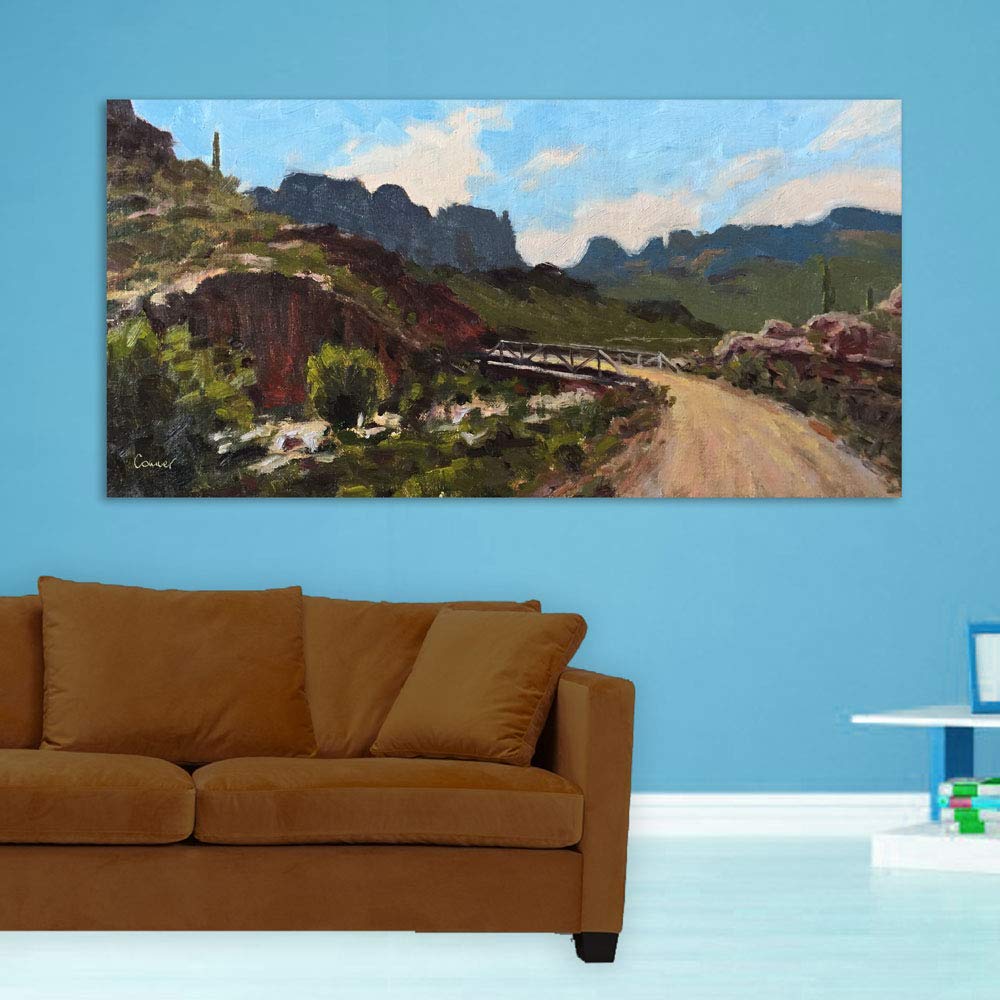
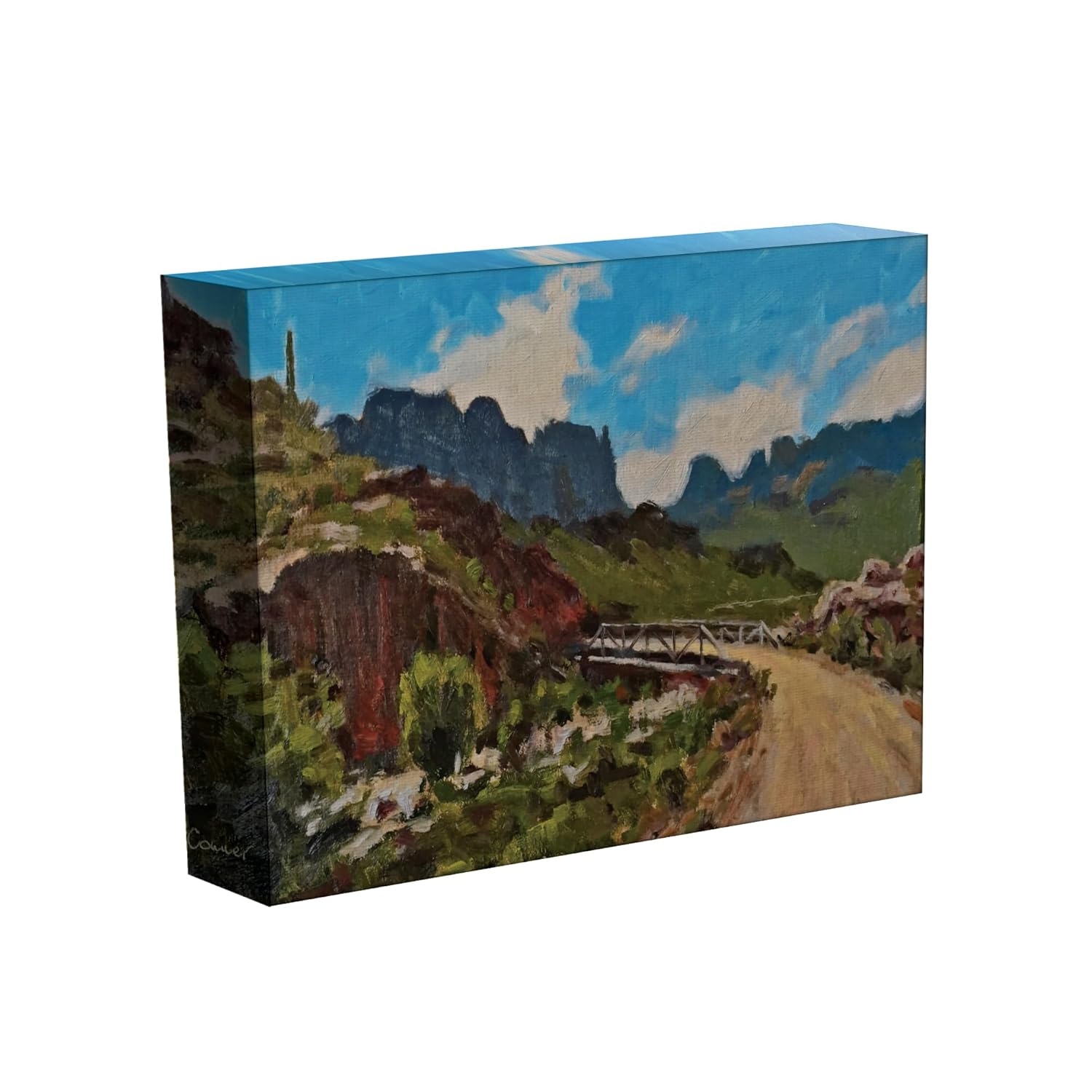
Here's what the diagonal road in this painting actually does: it creates depth. Not the obvious "mountains in the background" kind of depth, but the kind where your eye enters the frame at the lower right, follows the winding dirt path toward the wooden bridge, pauses there, then releases into the distant mountain range. This isn't a painting that sits flat on your wall demanding attention. It's one that pulls you in when you're sitting on your sofa and releases you when you look away. The 85cm width means it spans roughly half a 6-foot sofa — enough presence to anchor the wall, not so much that it overwhelms the furniture beneath it.
Why 85cm Works on 10-12 Foot Walls (And What Happens If You Size Up)
At 85cm wide, this canvas covers approximately 7-8% of a standard 10-foot Indian living room wall. That sounds small on paper, but here's the visual math that matters: when positioned 20-25cm above a 6-foot sofa, the canvas-to-furniture ratio hits that 50-60% range where wall art looks intentional rather than either cramped or floating.
The 40.5cm height matters for 8-foot ceilings. Standard Indian apartments give you roughly 90-100cm of usable wall space between sofa top and ceiling molding. This canvas uses less than half that vertical space, leaving breathing room above without creating an awkward gap. If your ceilings are 10 feet, you have even more margin — the canvas won't look undersized.
The 2:1 panoramic aspect ratio extends horizontal visual weight. From across the room — say, 3-4 meters at your doorway — the wide format reads as substantial even at modest dimensions. This is the same reason widescreen televisions feel larger than their diagonal measurement suggests.
What These Colors Look Like on Cream Walls (Morning vs LED)
The palette here isn't what you'd call vibrant. It's deliberate. Sky blue dominates the upper third, but it's a muted, slightly hazy blue — not the saturated cyan you see in beach photography. The greens range from sage to olive to deep forest, concentrated in the left hillside. The dirt road carries terracotta and cream tones. The distant mountains are a blue-gray silhouette.
On cream or off-white walls — which describes 80% of Indian apartments — these earth tones settle in rather than pop out. Morning light through east-facing windows will cool the palette slightly, bringing out the blue-gray mountains. Afternoon light warms everything, making the terracotta road and rust-brown hillside shadows more prominent. Under warm LED lighting (3000K, which most Indian homes use), the greens deepen and the overall mood shifts toward evening warmth.
The practical compatibility: if your sofa is brown, beige, or tan fabric — and statistically, it probably is — the road and hillside colors in this painting will echo those tones without matching them. This creates cohesion. The painting looks like it belongs in your room rather than like something you imported from a different aesthetic universe.
Installation in Indian Walls (Concrete vs Drywall)
At 3kg, this canvas requires proper wall anchors — it's too heavy for adhesive strips to hold reliably long-term. The good news: 3kg is well within the safe range for standard 6mm concrete anchors or drywall toggles.
For concrete walls (common in older Indian buildings and most load-bearing walls): drill two 6mm holes at 35mm depth, tap in the included concrete anchors, screw in the hooks. The canvas hangs from D-rings on the back. Total wall damage: two holes smaller than a pencil eraser, easily filled with wall putty when you move.
For drywall or plasterboard (common in modern apartments and interior partition walls): same process, but use the drywall anchors instead of concrete anchors, and drill to 30mm depth. The toggle mechanism spreads load across a larger area inside the hollow wall.
The hanging template eliminates measurement anxiety. Tape it to the wall at your chosen height, mark through the template holes, remove template, drill. You're not eyeballing spacing or hoping your measurements were accurate.
Why Canvas Outlasts Fabric Tapestries in Indian Conditions
Fabric tapestries — those woven wall hangings you see in boutiques and online marketplaces — have a specific failure mode in Indian climates: they absorb humidity, stretch, and never quite return to their original tension. After two monsoon seasons, most fabric wall hangings develop a permanent sag in the center. The weave loosens. Colors that weren't properly fixed bleed slightly at the edges when humidity peaks.
Canvas stretched on a wooden frame behaves differently. The cotton canvas has a moisture-resistant polymer coating — water vapor can't penetrate the fibers the way it does with untreated fabric. The kiln-dried pinewood frame is stabilized at 12% moisture content before assembly, which is below the equilibrium moisture content for most Indian climates. The frame doesn't absorb atmospheric moisture and expand; the canvas doesn't absorb and sag.
The structural difference: fabric tapestries hang from a single rod at the top, so all tension comes from gravity pulling downward. Canvas is stretched in all four directions and stapled to a rigid frame, so tension is distributed and maintained mechanically. One method fights humidity constantly. The other is designed to ignore it.
What This Will Actually Feel Like in Your Room
From the doorway — the first view guests get — this canvas reads as a horizontal band of earthy color above your sofa. The specific subject (road, bridge, mountains) isn't immediately legible at 4 meters distance. What registers is: there's intentional art on that wall, it has warm natural tones, it fits the space.
From the sofa itself — where you'll spend most of your time looking at it — the composition reveals itself. The diagonal road creates a sense of entering the scene. The bridge provides a resting point for the eye. The mountains offer distance. It's a painting that rewards attention without demanding it.
This isn't a conversation-starter painting. Nobody's going to walk in and ask "where did you get that?" the way they might with a bold abstract or a striking portrait. It's a room-completer painting. The kind where people sense that your living room feels finished, cohesive, intentional — without necessarily being able to articulate why.
If you have other décor on adjacent walls — photo frames, a clock, smaller accent pieces — this canvas won't compete with them. The muted palette and horizontal format create a visual anchor point that organizes the wall rather than overwhelming it.
Moolwan Design Note
The composition places the bridge slightly left of center, with the road sweeping in from the lower right — this asymmetrical balance prevents the static feeling of centered focal points while maintaining visual stability through the horizontal mountain line.
Moolwan Quality Standard
Designed for Indian apartments and lighting conditions. Packed for long-distance Indian transit. Quality checked before dispatch. Printed to resist humidity-related color fading. Ships from West Bengal.
Moolwan Fit Guidance for Indian Homes
At 85x40.5cm, this panoramic canvas suits walls above 6-foot sofas or along hallways. The 2:1 aspect ratio extends perceived width — ideal for rooms where horizontal visual flow matters more than vertical impact.
Quick Specifications
- Product: Moolwan Mountain Road Bridge Canvas Wall Art Painting (85x40.5cm)
- Brand: Moolwan
- Category: Canvas Wall Art Painting
- Collection: Landscape Wall Art Collection
- Dimensions: 85cm W x 40.5cm H x 2cm D
- Weight: 3kg
- Material & Construction: Pure cotton canvas 380 GSM, fade-resistant eco-solvent ink, imported pine wood sturdy frames (1.5-inch kiln-dried)
- Colors: Sky blue, sage green, olive green, terracotta brown, cream tan, maroon-brown shadows, blue-gray mountains
- Best For: Above 6-foot sofa, dining wall, hallway — rooms with cream/off-white walls and brown/beige furniture
- Ships From: West Bengal
Frequently Asked Questions
Will 85cm look too small above my 8-foot sofa?
At 85cm, the canvas covers about 35% of an 8-foot (240cm) sofa width. This is slightly below the ideal 50-60% range, so it may appear modest rather than substantial. For 8-foot sofas, consider pairing with a smaller complementary piece on one side, or centering the canvas where it can anchor the space without needing to span the full furniture width.
How will the colors appear under warm LED lighting at night?
The earth tones — terracotta road, olive greens, rust-brown hillside — will deepen and warm under 3000K LED lighting. The sky blue will appear slightly muted, shifting toward a softer gray-blue. The overall effect is warmer and more evening-appropriate than how it looks in daylight.
Can I install this on a rental apartment wall without losing my deposit?
Yes. The installation requires two 6mm holes, each about 35mm deep. These are smaller than standard picture frame nail holes. When you move out, fill with wall putty (₹50 from any hardware store), sand smooth, touch up with matching paint. Total repair time: 15 minutes. Landlords typically don't notice or care about holes this small.
Will the canvas warp during monsoon season?
The cotton canvas has a moisture-resistant polymer coating that prevents humidity absorption. The pinewood frame is kiln-dried to 12% moisture content — below the equilibrium point for Indian monsoon conditions — so it won't expand and contract with humidity changes. Canvases built this way remain dimensionally stable through multiple monsoon cycles.
How do I clean dust off the canvas surface?
Dry microfiber cloth, wiped gently across the surface every 2-3 weeks. Don't use water, cleaning sprays, or furniture polish. The moisture-resistant coating means dust sits on the surface rather than embedding in the canvas weave — it wipes away cleanly with dry dusting.
Product Snapshot
- Brand: Moolwan
- Product: Moolwan Mountain Road Bridge Canvas Wall Art Painting (85x40.5cm)
- Category: Canvas Wall Art Painting
- Collection: Landscape Wall Art Collection
- Theme/Type: Rural landscape with road, bridge, and mountain vista
- Best For: Living room above 6-foot sofa, dining wall, hallway — suits cream walls and brown/beige furniture
- Primary Differentiator: Diagonal road composition that creates visual depth without demanding attention
- Secondary Differentiators: Earth-tone palette echoing common Indian furniture colors; 2:1 panoramic aspect ratio for wide wall spans
- Material & Construction: Pure cotton canvas 380 GSM, fade-resistant eco-solvent ink, 1.5-inch kiln-dried pinewood frame
- Care Instructions: Dry dust with microfiber cloth every 2-3 weeks; avoid water and cleaning chemicals
- Ships From: West Bengal
- Packing: Long-distance transit ready
- Quality Check: Before dispatch